How has Airbnb pledged to aid refugees?

Airbnb hosts a programme called ‘open homes’ which allows hosts to ‘offer their space for free to people going through a difficult time’. (Airbnb.co.uk) This includes refugees needing housing to begin their new life and get back on their feet. The program is also partnered with specialist local and global non-profit refugee organisations that directly link the open homes to their clients.

This kind of campaign is vital to refugees who may be homeless without the aid from others. The hosts are also provided with support and insurance against any damage for participating in the scheme also.
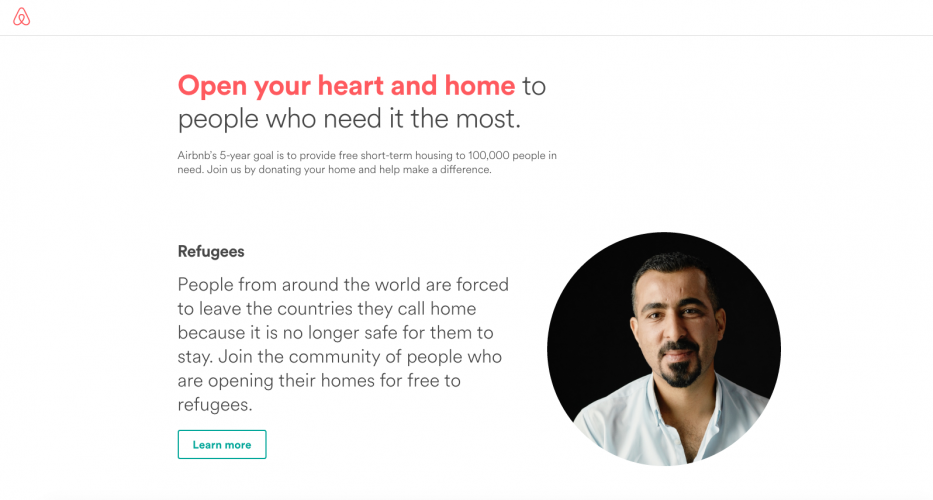
(designweek.co.uk, 2017)

To add to this, Airbnb has also promised to provide temporary housing to 100,000 displaced people in need of aid over the next 5 years, with $4 million being donated to the International Rescue Committee in the next 4 years. This is a non profit committee helping people affected in crisis. The founders stated ‘‘we’ll work with our community of hosts to find not just a place to stay, but also a place to feel connected, respected, and a part of a community again,” which shows the aim of the scheme to not only find a temporary home for the refugees but to also help them fit into their new life through connecting with the community and people around them. (Refugees at home ltd, 2017)

This scheme has revolutionised how easy it is for anyone to open up their home to help others and play an individual part in helping those in need.

References:

Airbnb.co.uk. OpenHomes. (accessed 10th April) https://www.airbnb.co.uk/openhomes/refugee-housing

Refinery 29, 2017. ’How Airbnb is tackling the refugee crisis’ Refugees at Home Ltd. (accessed 10th April) https://www.refugeesathome.org/2017/06/how-airbnb-is-tackling-the-refugee-crisis/

Mc Laughlin, 2017. ‘Airbnb debuts Open Homes platform for housing refugees’ (accessed 10th April) https://www.designweek.co.uk/issues/12-18-june-2017/airbnb-debuts-open-homes-platform-housing-refugees/

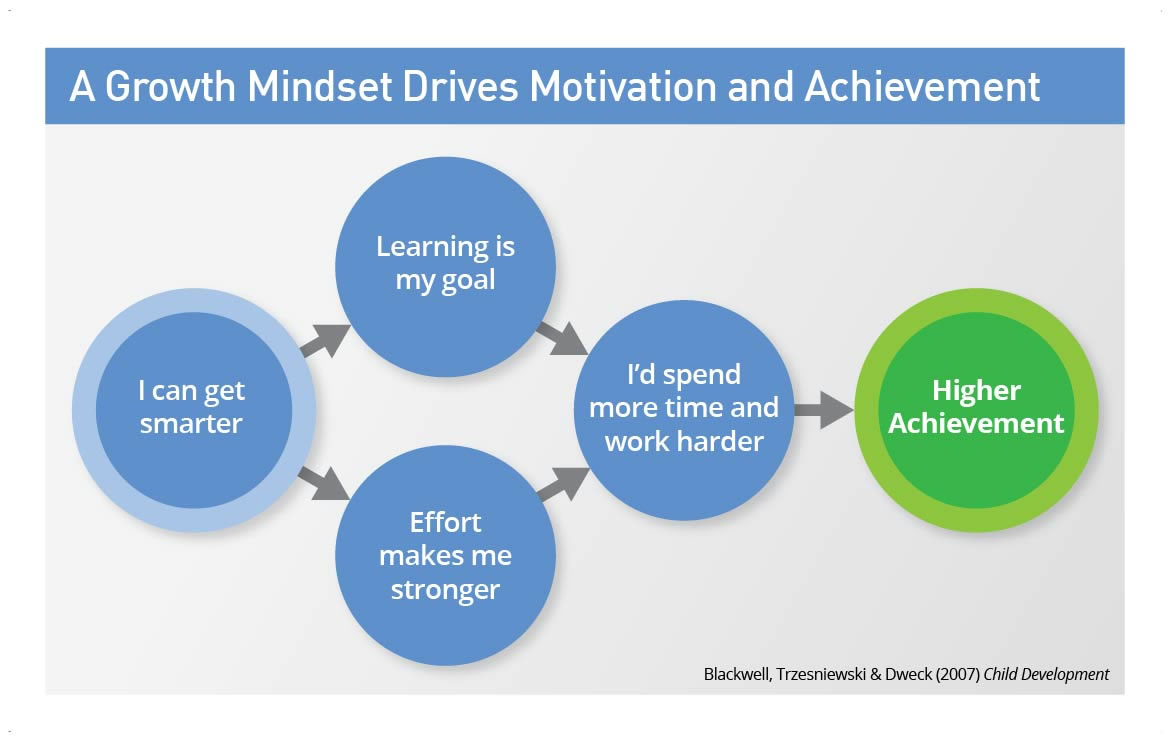
Image url: https://s3-eu-central-1.amazonaws.com/centaur-wp/designweek/prod/content/uploads/2017/06/12163004/Screen-Shot-2017-06-12-at-16.21.40-933×500.png

How is the clothing company ‘Patagonia’ battling climate change?

With climate change and global warming becoming increasingly more alarming, large companies are finally making the changes to reduce their impact on the world. One of these companies well known for its positive effect on the environment is ‘Patagonia’.

Patagonia’s aim is to: “Build the best product, cause no unnecessary harm, use business to inspire and implement solutions to the environmental crisis.” The company has multiple policies and steps they take towards making the company as environmentally friendly as possible and to monitor their impact on the world. These involve Measuring their Carbon Footprint, using renewable energy, giving employees a drive less program, using bluesign® Approved Materials and donating 1% of their sales to the ‘preservation and restoration of the natural environment’ since 1985. Wherever they can, the company tries to advocate wider change to reduce climate change and set an amazing example to other businesses of a largely successful but still a largely eco friendly company. (Patagonia.com)

If Patagonia can implement these changes, then there’s no excuse as to why other companies aren’t doing the same.

(inhabitat.com)

Recent news show Patagonia’s pledge to donate its $10 million profit from the 2018 Trump tax cuts to grassroots groups combatting climate change, which included organisations working in organic agriculture. (Au-Yeung, 2018) This gives the company positive media attention and a very good reputation, which consumers appreciate. We as consumers lessen our contribution to climate change by buying their products since our money is spent on an environmentally aware and active company as opposed to one that worsens climate change.

References:

Our Business and Climate Change. Patagonia. (accessed 28th March) https://eu.patagonia.com/pl/en/climate-change.html

Au-Yeung, A. (2018) ‘Patagonia’s Billionaire Founder To Give Away The Millions His Company Saved From Trump’s Tax Cuts To Save The Planet’ (accessed 28th March) https://www.forbes.com/sites/angelauyeung/2018/11/29/patagonias-billionaire-founder-to-give-away-the-millions-his-company-saved-thanks-to-tax-cuts/

Growth Mindset in Education

What is Growth Mindset?

Growth Mindset was first discovered by Carol Dweck, it refers to people who know the importance of effort, and believe that ability is a skill that is learnt, and not inherited or inflexible. These people overcome challenges and difficulty rather than give up. Those who do not have this Mindset instead have a ‘Fixed Mindset’. They put in less effort and don’t believe ability can be taught to anyone, so therefore are less likely to succeed and give up more easily. (Hochanadel et al, 2015)

However a Mindset can be altered and it is only a matter of choice as to which Mindset a person adopts. A Growth Mindset parallels success with effort, whereby ‘a persons true potential in life is unknown’. Only through continuous effort and hard work can a person accomplish success and achieve their full potential.  (Dweck, 2006)

(mindsetworks.com, 2017)

How is this useful in education?

Growth Mindset allows students to stay motivated and try harder to succeed and constantly improve their abilities. Similarly it allows students to learn that natural talent isn’t the cause for success but hard work is. Therefore any student is capable of success in whatever field they put the most effort and hard work into, no matter the challenges and set backs that they face. This teaches students not to give up but to persevere, as eventually achievement and success will follow. This Mindset can then be applied for students in the future and their career following on from school and/or university.

References:

Hochanadal, A et al. (2015) ‘Fixed And Growth Mindset In Education And How Grit Helps Students Persist In The Face Of Adversity’ Journal of International Education Research, Volume 11, Number 1. Pg47-50. (accessed 4th February)  https://files.eric.ed.gov/fulltext/EJ1051129.pdf

Dweck, C. (2006) ‘Mindset The New Psychology of Success’ Mindset 3, TheBusinessSource.com. (accessed 4th February) http://ebsp.s3.amazonaws.com/pdf/mindsett.pdf

Mindset Works (2017) ‘Dr. Dweck’s discovery of fixed and growth mindsets have shaped our understanding of learning’ (accessed 4th February) https://www.mindsetworks.com/science/M

url for image: https://www.mindsetworks.com/Assets/images/science/the-science/the-growth-mindset-i-can-get-smarter-large.jpg

Is there enough racial diversity within the beauty industry?

Within the beauty industry brands are increasingly becoming more aware of racial diversity within their marketing, advertising and products as a whole.

This is particularly seen with cosmetic brand ‘Fenty Beauty’ which celebrates all skin tones with 40 different foundation colours, which has encouraged other makeup brands to expand their colour spectrum of foundations too. (Gassam, 2018) This has raised the question as to why other brands had not created so many inclusive shades in the past, as there’s no excuse that it wasn’t possible.

(Garcia, 2017)

An article from the New York Times discusses the need for more improvements in the beauty industry, Sam Fine a makeup artist states that the changes for inclusivity need to last rather than be viewed as trends.  Stocks need to be supplied of all shades in all stores not just the flagship ones, and makeup artists should be trained to apply makeup to all skin types not just their own. He says ‘It’s not just about putting a black model next to Gigi Hadid.’ This shows that changes must be in depth and long term not just because the campaign one year involves a woman of colour when the next year it may not. (Shapiro, 2018)

Therefore the truth is that a lot of brands are increasing their makeup colour range to suit all skin tones but its not just all about increasing the shades. Ultimately its also about teaching makeup artists how to apply makeup to all ethnicities and to stock these products in every store to make them accessible everywhere.

References:

Gassam, J. (2018) ‘Five Diversity And Inclusion Trends We Can Expect In 2019’ Forbes. (accessed 28th February) https://www.forbes.com/sites/janicegassam/2018/12/19/5-diversity-and-inclusion-trends-we-can-expect-in-2019/#7b17ec3d6f7b

Shapiro, B. (2018) ‘Beauty is more diverse than ever, but is it diverse enough?’ The New York Times. (accessed 28th February) https://www.nytimes.com/2018/09/11/style/beauty-diversity.html

Garcia, C. (2017) ‘Fenty Beauty’s Dark Foundation Shades Are Selling Fast — Here’s Why That Matters’ Popsugar. (accessed 28th February) https://www.popsugar.co.uk/beauty/Fenty-Beauty-Dark-Foundation-Shades-Sold-Out-44015305?utm_medium=redirect&utm_campaign=US:GB&utm_source=direct (use image)

Recruitment on Social Media

What do employees look for on candidate’s social media profiles?

Employees look for candidates who show an interest in their profession on social media such as sharing content on their page. They also look for candidates with active engagement on social media and with completed detailed profiles to show full commitment to job searches and their career. Likewise information should be constant throughout all social media profiles to show consistency. (Madia, 2011)

(HR in Asia, 2013)

An important step to take in specific is to keep your LinkedIn profile up to date with as much information as possible, since this is the most common social media site that recruiters look at. With other social media accounts which are less commonly searched, make sure any questionable posts are deleted, such as those that may be illegal, sexual or include profanity. Likewise there shouldn’t be any negative or offensive comments about another user or an organisation. (Wood, 2017)

Statistics on social media recruitment:

A survey showed that from the sample of people used, 85% of professionals are members of LinkedIn, which reiterates the importance of keeping this social media site up to date. Whereby 79.6% of employees would use LinkedIn to research candidates prior to an interview.

Additionally this survey also showed that 68% of job seeking candidates feel that networking through social media is important and develops their career further. This is because through networking, extra research and knowledge is acquired, and you can join groups related to your industry and directly converse with companies online. (Walters, 2017)

In summary, Social media is increasingly being used in recruitment processes. Therefore its important that users adapt their social media accounts to be career friendly and even use them to show their enthusiasm for the industry they’re searching for a job in. This way, their social media could impact their career for the better.

References:

Walters, R. (2017) ‘USING SOCIAL MEDIA IN THE RECRUITMENT PROCESS’ Whitepaper insight series. (accessed 23rd February) https://www.robertwalters.com/content/dam/robert-walters/corporate/news-and-pr/files/whitepapers/using-social-media-in-the-recruitment-process.pdf

Wood, M. (2017) ‘Not Getting Any Job Offers? Your Social Media Activity Could Be The Reason’ Forbes. (accessed 22nd February) https://www.forbes.com/sites/allbusiness/2017/06/22/not-getting-any-job-offers-your-social-media-activity-could-be-the-reason/#465ea7d3374b


Madia
, S. (2011) “Best practices for using social media as a recruitment strategy”,Strategic HR Review, Vol. 10 Issue: 6, pp.19-24 (accessed 25th Februrary) https://www.emeraldinsight.com/doi/full/10.1108/14754391111172788

HR in Asia (2013) ‘Does social media recruiting work?’ (accessed 25th February) http://www.hrinasia.com/recruitment/does-social-media-recruiting-work/